
Warming impacts the Himalayas; number of missing in Nepal floods revised upward to 6,150
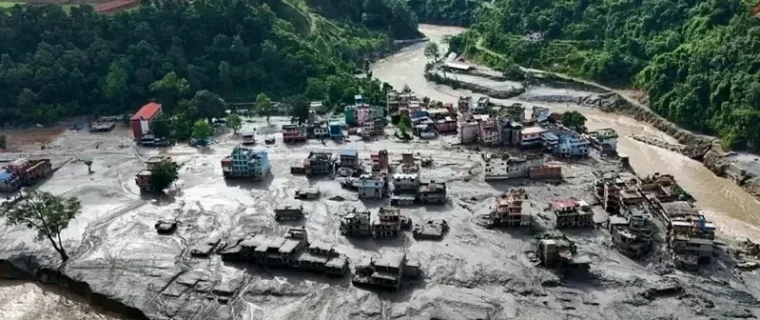
Nepal’s disaster management authorities stated today that, following data collection and verification in the affected areas, the number of people missing from the August 26 floods has been sharply revised upward to 6,150; the government attributes the disaster to the severe impact of global warming on the Himalayas.
Shanti Mahat, a spokesperson for the disaster management authority, told AFP: “We have been gathering detailed information on missing persons from district offices and revising the figures after verification.” The number of missing persons reported the previous day was 5,179.
According to Nepal’s disaster management authorities, 1,403 bodies have been recovered so far, with the identities of 105 confirmed. State-run media in Nepal reported that the death toll within Chinese territory stands at 43, with 519 people missing.
The deadly glacial collapse and landslide along the Nepal-China border have resulted in a combined death toll of 1,446, with at least 6,669 others missing. The missing include hundreds of foreign nationals, among them tourists and pilgrims.
Witnesses described the scale of the flooding as unprecedented, and the Nepalese government has pointed to the severe impact of rising global temperatures on the Himalayan range. Nepal estimates that reconstruction costs following this deadly flood will reach as high as $4.78 billion.
Scientists stated today that climate change was a significant factor in the deadly glacial collapse on the China-Nepal border. However, scientists from World Weather Attribution noted that the disaster was not triggered by a single extreme weather event but was the result of a “compound crisis” involving a combination of long-term warming, glacial retreat, permafrost thawing, and geological instability. In a report, World Weather Attribution notes: “Persistent warming has raised the freezing level in the high-altitude regions of the Himalayas, exposing deep-seated ice and permafrost to higher temperatures and prolonged melting periods, thereby compromising the structural integrity of mountain slopes.”
On August 26, a massive volume of rock and glacial ice collapsed from Langtang Lirung, triggering a torrent of floodwater, ice, and debris that surged downstream, destroying communities and infrastructure along its path.
Walter Immerzeel, a mountain hydrologist at Utrecht University and co-author of the report, stated that the region is undergoing a “fundamental, irreversible transformation,” with glacial retreat and permafrost degradation undermining the stability of the mountain slopes.